Stagnant Q1: Reemergence of Inflation Risk and Economic Uncertainty

Most of the undercurrents that I highlighted at the beginning of 2026 have continued with decent velocity. Risk appetite is still surging, economic uncertainty has risen to new highs given the geo-political mess that has become the re-engagement in the middle east with Iran, and to top it all off commodities are looking to be on the brink of a super cycle which could reignite inflation.
The same question always emerges from investors...what's next?
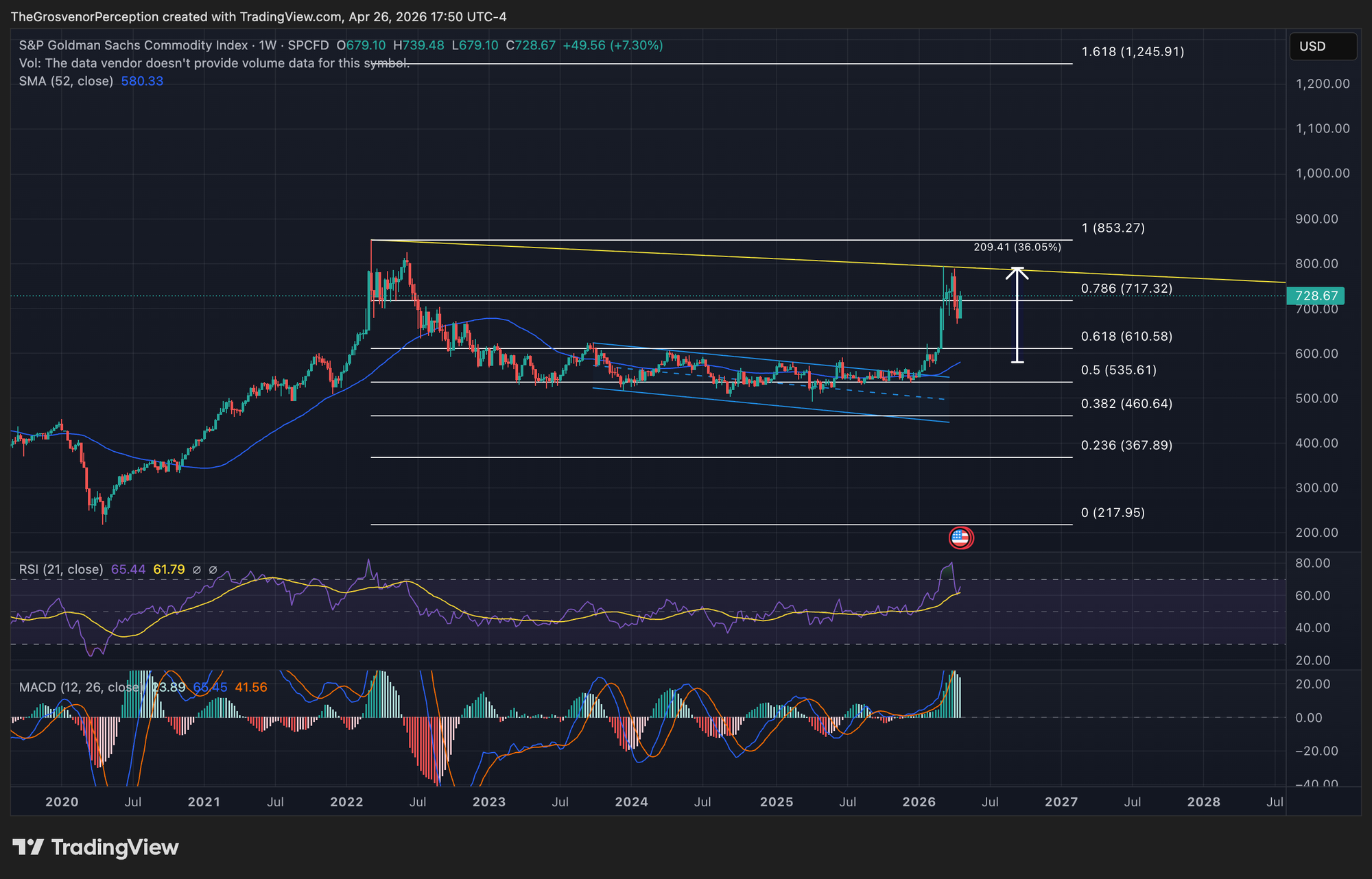
Commodities have rallied on the breakout of oil prices due to the escalation in the middle east. I explained my thesis of the USA's return to the middle east in a small private group of investors, which played out as if I scripted it myself. Take a look below:
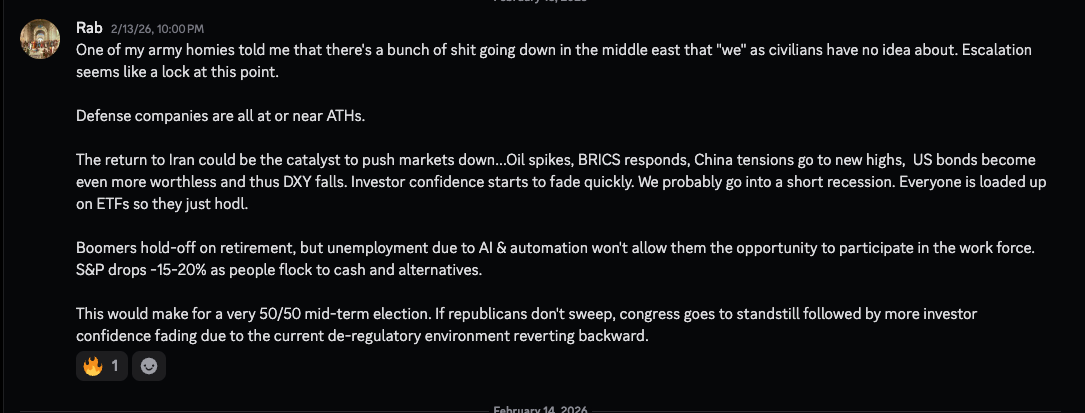
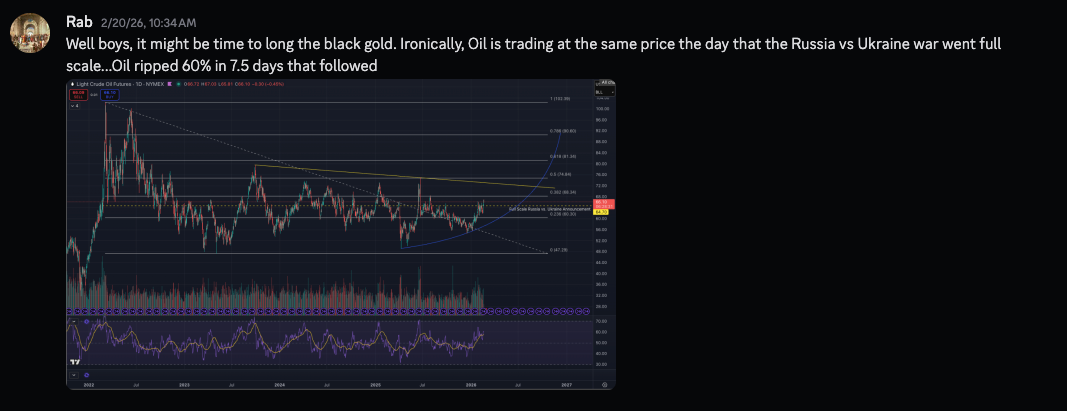
The technical setup for longing Oil futures was the best I had seen in years. As I wrote, prices were ironically at the exact same levels when the Russia vs. Ukraine war started.
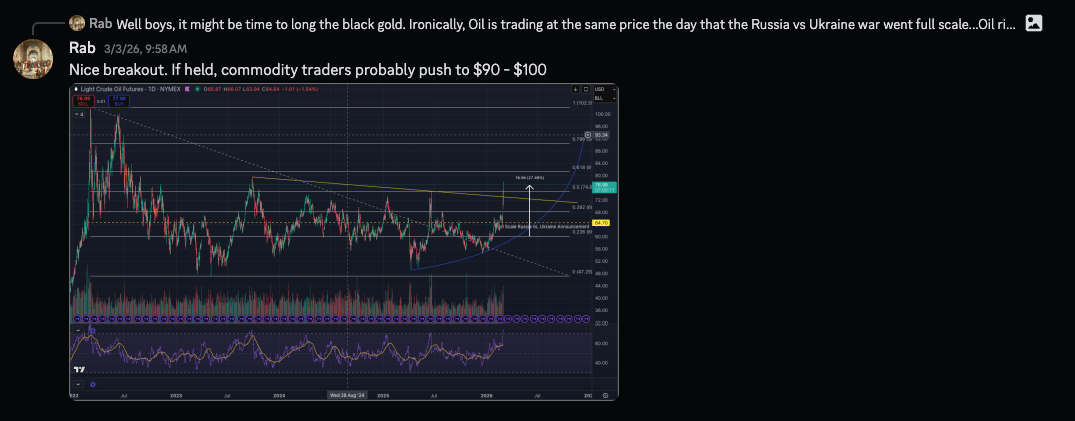
Easy call that Oil would rally to $100 per barrel knowing that big commodity traders would mimic the 2022 Russia vs. Ukraine breakout.
Currently, the price per barrel sits right under $100 after it went through a short-term correction. Typical with assets of this size have the kind of blow-off rally that oil experienced in March.
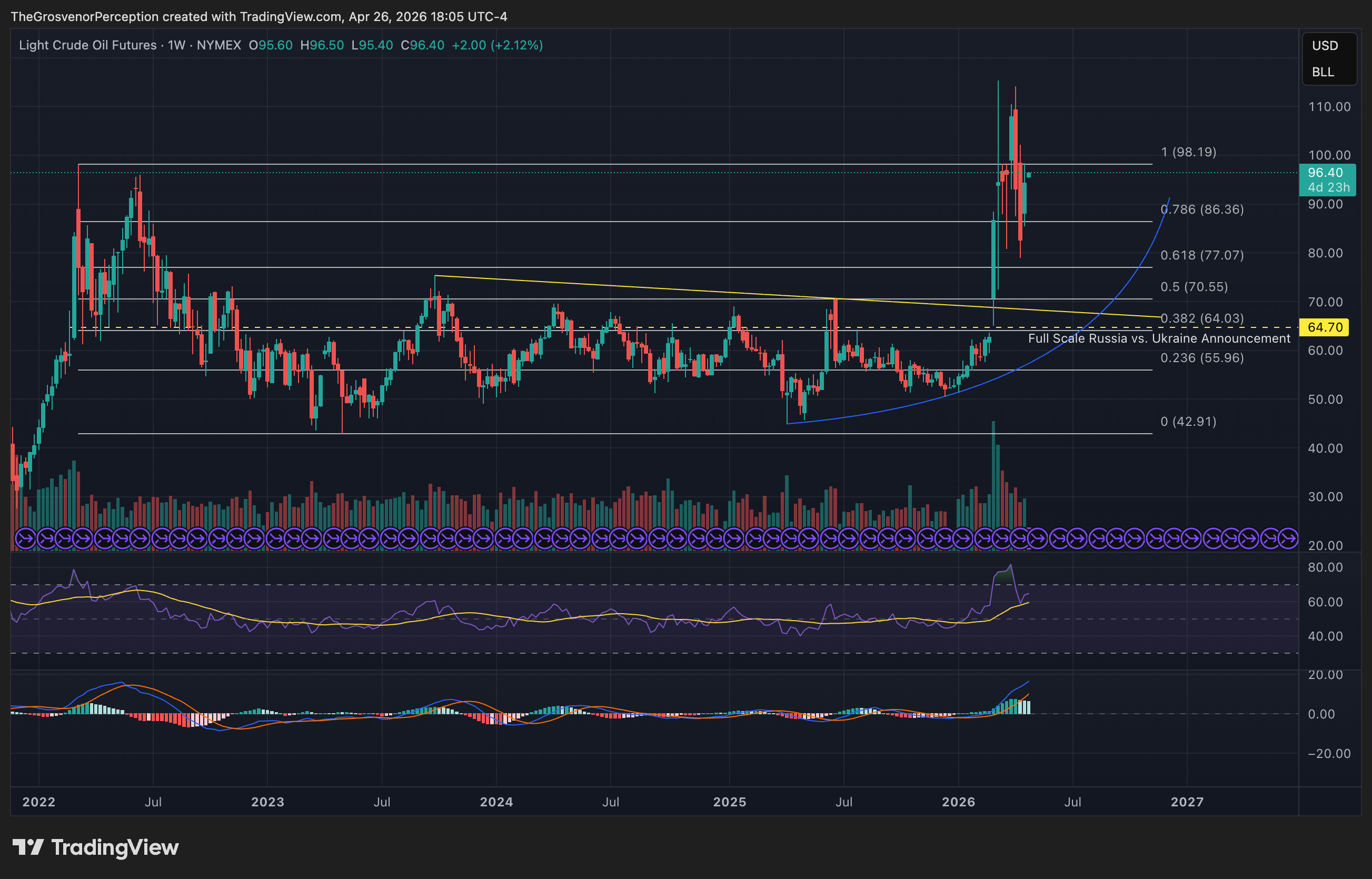
My outlook on commodities and oil prices are more signaled by our ping pong match between China and the BRICS allies. Europe and Asia rely extremely heavily on middle eastern oil and natural gas. With some of the other major bottlenecks like the Chinese monopoly on Rare-Earth minerals, the White House is playing chess while everyone thinks that this is a match of checkers.
My take on the current oil situation with Iran is pretty simple when you ignore the noise. It doesn't matter which headline grabs the most attention when talking about whether or not the Strait of Hormuz is open, closed, allowing 10 ships to pass through per day or none. The hysteria that is our media industrial complex isn't concerned with publishing accurate news or reporting, rather what headlines will produce the most clicks and webpage visits.
This is about power, control, and applying pressure. The United States is oil independent and has been for many years. Now that the major global economies ex-China are in desperation to acquire oil and natural gas from the middle east, they have turned to the US. Japan, Germany, and India are a few of the economies that can't afford to be energy restricted or in a worse case scenario end up in an energy crisis.
Simply by taking control of the Straight of Hormuz, the White House has strategically redirected oil sales to from these other countries to the United States and more importantly, might redirect their short-term alliances.
NEW: Japan received its first U.S. crude oil shipment since the Iran crisis disrupted Middle East supplies.
— Clash Report (@clashreport) April 26, 2026
The tanker OTIS delivered about 910,000 barrels of Texas light crude to a refinery near Tokyo after a ~35-day via the Panama Canal—bypassing the Strait of Hormuz.
Japan… pic.twitter.com/6sr1PV2HnB
So where does this lead us in regards to the equity markets? How do we gage Risk-On vs. Risk-Off?
I'll dive into the macro picture and then move into a few new stocks that we see having great Risk:Reward even though the broader picture might seem uncertain.